


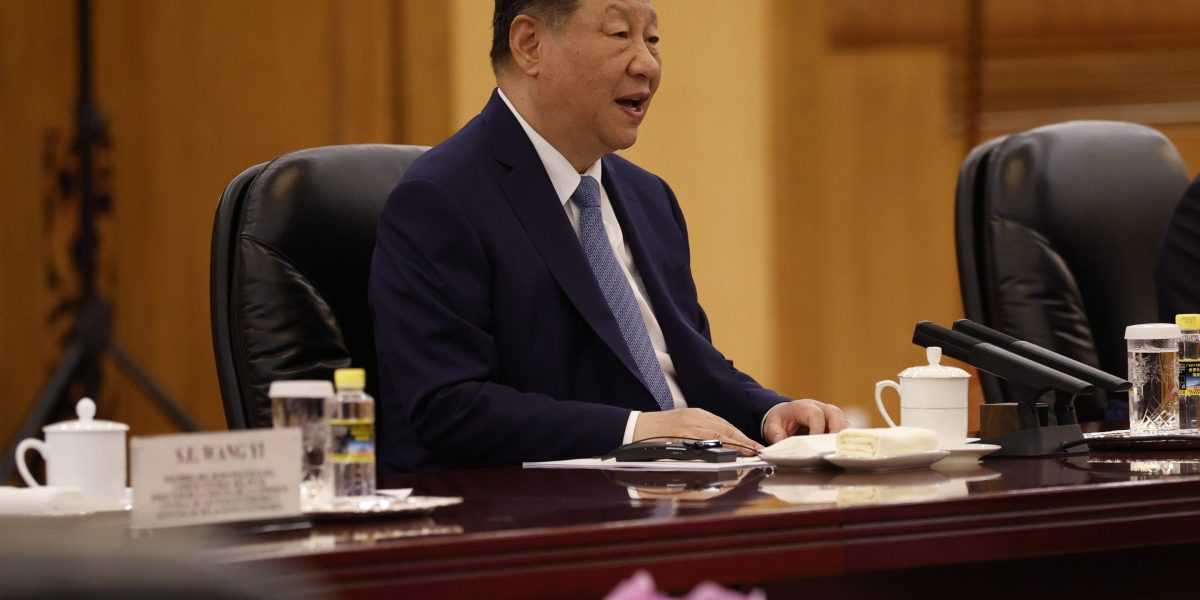
The Crumbling World Order: Xi Jinping's Stark Warning
In a sweeping address that has reverberated through global financial circles, Chinese President Xi Jinping declared that the world order is “crumbling into disarray.” This assertion comes at a time when geopolitical tensions are escalating, notably due to the ongoing conflict in Iran, a fractious trade environment, and shifting alliances that challenge established norms. Xi's comments encapsulate a growing concern among world leaders and financial experts about the potential impacts of these developments on global economic stability.
Geopolitical Tensions and Their Economic Implications
The Iran war has emerged as a pivotal factor influencing global markets. As the conflict escalates, oil prices have surged, impacting energy-dependent economies and raising inflationary pressures worldwide. This situation has the potential to exacerbate existing economic vulnerabilities, particularly in nations that are already grappling with high debt levels and sluggish growth. The fear is that prolonged instability in the Middle East could lead to a broader economic crisis, further complicating the already fragile recovery from the COVID-19 pandemic.
Trade Chaos: The Impact on Global Supply Chains
In addition to geopolitical strife, the current trade landscape is marked by chaos, highlighted by tariffs, sanctions, and trade wars. The disruption of global supply chains, particularly in critical sectors such as technology and agriculture, poses significant risks to economic growth. Companies are scrambling to adapt to new trade barriers and shifting regulations, leading to increased costs and uncertainty in the marketplace. As multinational corporations reassess their strategies, the specter of a global recession looms large, with many analysts warning of a slowdown in consumer spending and investment.
Concerns from Financial Leaders: Larry Fink and the IMF's Warnings
Among those expressing concern is Larry Fink, the CEO of BlackRock, who has highlighted the potential for a global recession as a consequence of these converging crises. Fink’s remarks underscore the apprehension within the financial community regarding the sustainability of economic growth amid rising risks. The International Monetary Fund (IMF) has echoed these sentiments, revising its growth forecasts downward and emphasizing the need for coordinated policy responses to mitigate the fallout from geopolitical tensions and trade disruptions.
The Role of Central Banks in a Volatile Environment
As the threat of recession looms, central banks around the world face the daunting task of balancing inflation control with economic growth. The U.S. Federal Reserve, European Central Bank, and other monetary authorities are navigating a complex landscape of rising interest rates and tightening monetary policies. The challenge lies in addressing inflation without stifling growth, a delicate balancing act that requires careful consideration of both domestic and international economic conditions. The potential for missteps in monetary policy could exacerbate an already precarious situation, leading to market volatility and diminished investor confidence.
Investor Sentiment: Navigating Uncertainty
In this challenging environment, investor sentiment is increasingly cautious. Stock markets have experienced heightened volatility, with many investors adopting a risk-off approach as they reassess their portfolios in light of geopolitical uncertainties and economic forecasts. Safe-haven assets such as gold and U.S. Treasuries have seen increased demand, indicating a flight to security amid fears of a downturn. Moreover, sectors that are typically resilient during economic slowdowns, such as utilities and consumer staples, are gaining traction as investors seek stability.
The Impact on Emerging Markets
Emerging markets, often more vulnerable to external shocks, are particularly at risk in this environment. With rising commodity prices and tightening financial conditions, many developing economies are facing increased pressure on their currencies and inflation rates. Countries that rely heavily on exports may see their trade balances deteriorate, further compounding economic challenges. The IMF has urged policymakers in these nations to implement structural reforms and bolster resilience to mitigate the impacts of external shocks.
Strategic Responses: Policy Recommendations for Stability
To navigate the complexities of the current economic landscape, experts advocate for a multi-faceted approach that includes coordinated fiscal and monetary policies. Governments are encouraged to prioritize infrastructure investments, support innovation, and enhance trade relationships to foster resilience. Additionally, international cooperation is essential to address the underlying issues contributing to geopolitical tensions and economic instability. By working collaboratively, nations can develop strategies that promote sustainable growth and mitigate the risks of a global recession.
The Path Forward: Preparing for an Uncertain Future
As the world grapples with the implications of Xi Jinping's assertion regarding the crumbling world order, it is clear that the convergence of geopolitical tensions, trade chaos, and economic uncertainty presents formidable challenges. The potential for a global recession looms large, prompting leaders and financial experts to reconsider their strategies and responses. The path forward will require adaptability, resilience, and a commitment to fostering stability in an increasingly unpredictable world. As nations navigate these turbulent waters, the emphasis must be on collaboration and proactive measures to safeguard economic growth for the future.