


Introduction to Singapore's Smart Manufacturing Revolution
Singapore has positioned itself as a leader in the global manufacturing landscape, particularly through its embrace of advanced technologies in smart factories. As industries evolve to meet the demands of a rapidly changing world, Singapore's smart factories are gaining recognition for their innovative practices. This article delves into how six notable smart factories in Singapore are leveraging technology to enhance productivity, reduce waste, and elevate their global standing in the manufacturing sector.
Factory Automation: The Backbone of Smart Manufacturing
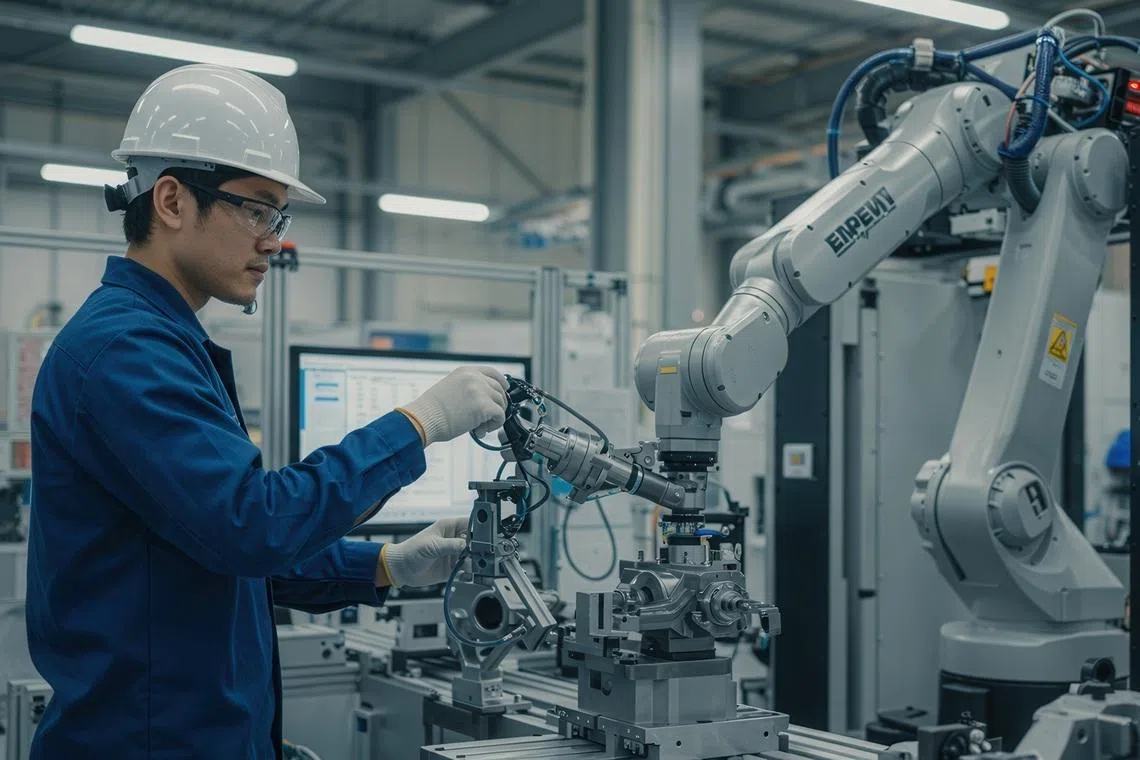
Automation is at the heart of smart manufacturing, allowing factories to optimize their operations through robotics and artificial intelligence (AI). In Singapore, companies are increasingly investing in automation to drive efficiency and accuracy in production processes. These advancements not only streamline operations but also significantly reduce human error, leading to higher quality outputs.
For instance, one of the leading smart factories in Singapore has implemented a fully automated assembly line for electronics manufacturing. This facility utilizes collaborative robots (cobots) that work alongside human operators, enhancing productivity while maintaining safety standards. The integration of AI-driven analytics further allows for predictive maintenance, minimizing downtime and ensuring continuous production flow.
Data-Driven Decision Making
In the age of digitalization, data analytics plays a crucial role in transforming manufacturing practices. Smart factories in Singapore are harnessing big data to inform strategic decisions. By collecting and analyzing data from various stages of the manufacturing process, these facilities can identify bottlenecks, forecast demand, and optimize resource allocation.
One prominent example is a smart factory specializing in precision engineering, which employs advanced data analytics to monitor machine performance in real-time. This capability enables the factory to adjust operations dynamically, thereby maximizing efficiency and reducing costs. The effective use of data not only enhances operational performance but also contributes to sustainable practices by minimizing waste and energy consumption.
Adoption of IoT Technologies
The Internet of Things (IoT) has emerged as a game-changer in the manufacturing sector, enabling factories to connect machines, systems, and processes seamlessly. Singapore's smart factories are increasingly integrating IoT technologies to create interconnected ecosystems that facilitate real-time monitoring and control.
One factory, renowned for its advanced textile production, has implemented IoT sensors throughout its operations. These sensors monitor everything from temperature and humidity to machine performance, providing valuable insights that drive operational improvements. The real-time data allows for quick adjustments to production conditions, enhancing product quality and reducing waste.
Sustainability Initiatives in Smart Factories
As global awareness of environmental issues grows, sustainability has become a key focus for manufacturers worldwide. Singapore's smart factories are taking significant strides towards sustainable practices by incorporating eco-friendly technologies and processes.
One notable example is a smart factory in the food processing sector that has adopted energy-efficient machinery and waste recycling systems. By implementing solar panels and utilizing biodegradable materials, this facility significantly reduces its carbon footprint. Furthermore, the factory's commitment to sustainability resonates with consumers, enhancing its brand reputation and competitiveness in the global market.
Workforce Transformation and Skills Development
The rise of smart factories inevitably leads to a transformation of the workforce. As automation and digital technologies become more prevalent, the demand for skilled labor in advanced manufacturing is also increasing. Singapore's factories are not only investing in technology but also in the development of a skilled workforce capable of operating and maintaining these advanced systems.
Several smart factories have partnered with local educational institutions to create training programs that equip workers with the necessary skills in automation, data analytics, and IoT technologies. These initiatives aim to bridge the skills gap and ensure that the workforce is prepared for the challenges of modern manufacturing. By fostering a culture of continuous learning, these factories are positioning themselves as attractive employers in a competitive labor market.
Global Recognition and Competitive Advantage
The efforts of Singapore's smart factories are not going unnoticed on the global stage. As these facilities continue to innovate and excel in their operations, they are gaining recognition for their contributions to the manufacturing sector. This recognition not only enhances their brand image but also provides a competitive advantage in attracting international clients and partnerships.
One smart factory, specializing in high-tech components for the automotive industry, has recently received accolades for its cutting-edge production capabilities. Its ability to deliver high-quality products with shorter lead times has made it a preferred supplier for major automotive manufacturers around the world. Such achievements underscore the importance of innovation and efficiency in establishing a strong global presence.
The Role of Government Support and Policy Frameworks
The success of Singapore's smart factories can also be attributed to robust government support and favorable policy frameworks. The Singaporean government has implemented various initiatives to promote advanced manufacturing and encourage investments in technology. These initiatives include grants, tax incentives, and research funding aimed at fostering innovation in the manufacturing sector.
Additionally, the government's focus on creating a conducive business environment has attracted multinational corporations to establish their manufacturing bases in Singapore. This influx of investment has further catalyzed the development of smart factories, positioning Singapore as a global hub for advanced manufacturing.
Challenges and the Path Forward
Despite the significant advancements made by Singapore's smart factories, challenges remain. Issues such as cybersecurity threats, the need for continuous technological upgrades, and the potential for job displacement due to automation are critical concerns that need to be addressed. As factories become increasingly connected and reliant on digital technologies, ensuring robust cybersecurity measures will be paramount.
Looking ahead, the future of Singapore's smart factories will depend on their ability to adapt to changing market dynamics and technological advancements. Continued investment in research and development, along with a commitment to sustainability and workforce development, will be essential in maintaining their competitive edge in the global manufacturing landscape.
Conclusion: A Model for the Future of Manufacturing
Singapore's smart factories are setting a benchmark for the future of manufacturing, showcasing how advanced technologies can revolutionize traditional practices. By embracing automation, data analytics, and sustainability initiatives, these facilities are not only enhancing their operational efficiency but also contributing to the broader goals of economic growth and environmental responsibility.
As