


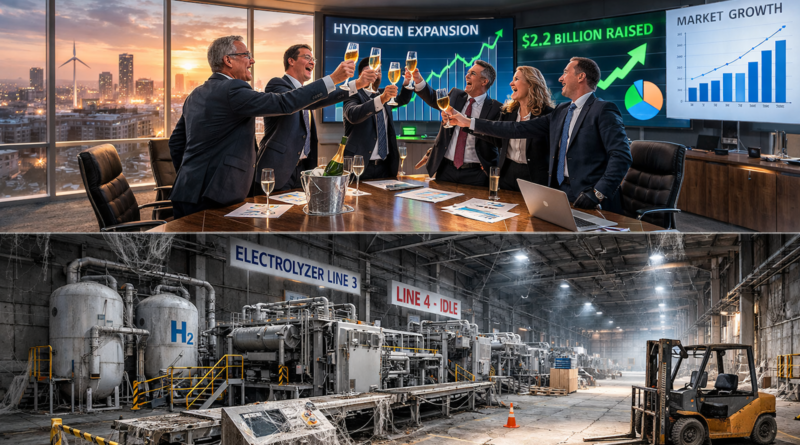
The Long Journey of Hydrogen Technology
Since the late 20th century, hydrogen has captured the imagination of investors, governments, and environmentalists alike. The promise of clean energy has driven the development of hydrogen and fuel cell technology, with companies like Ballard Power, founded in 1979, and FuelCell Energy, which traces its roots to the late 1960s, leading the charge. However, despite significant advancements and a growing interest in renewable energy sources, the hydrogen sector has experienced a tumultuous journey marked by cycles of optimism and disillusionment.
Investment Waves and Market Sentiment
The hydrogen sector has witnessed several investment waves over the past thirty years, often driven by global energy crises, environmental concerns, and governmental incentives for clean energy alternatives. The 1990s and early 2000s saw a surge in venture capital and public investment, as companies rushed to commercialize hydrogen technologies, particularly fuel cells. Yet, many companies struggled to achieve profitability, leading to a wave of bankruptcies and consolidations that dampened investor enthusiasm.
Technological Advancements Amidst Financial Challenges
Despite ongoing financial struggles, the hydrogen sector has made considerable technological advancements. Companies have developed more efficient fuel cells and improved hydrogen production methods, including electrolysis and steam methane reforming. However, these innovations have often failed to translate into sustainable business models. For instance, while Ballard Power has successfully developed fuel cell systems for various applications, including transportation and stationary power, it has yet to turn a consistent profit, raising questions about the viability of its business strategy.
The Role of Government Policy and Subsidies
Government policy has played a crucial role in the hydrogen industry's evolution. Various countries have implemented subsidies and incentives to promote clean energy technologies, including hydrogen. The European Union, for example, has set ambitious targets for hydrogen production and usage as part of its Green Deal, aiming for a carbon-neutral economy by 2050. However, the effectiveness of these policies in fostering a sustainable hydrogen market remains to be seen, as many companies still rely heavily on government support to survive.
Market Dynamics and Competitive Pressures
The hydrogen market is characterized by intense competition, with numerous players vying for a share of the pie. Established energy companies, traditional fossil fuel firms, and new entrants are all exploring hydrogen as a potential growth area. This competition has led to price pressures and increased scrutiny on the financial health of hydrogen companies. Many firms have found it challenging to differentiate themselves in a crowded market, leading to a reliance on partnerships and collaborations to enhance their market position.
Public Perception and Future Prospects
The public perception of hydrogen as a clean energy source has evolved over the years. Initially viewed as a potential silver bullet for the energy transition, hydrogen's reputation has been tempered by concerns over production methods, environmental impact, and safety issues. Nevertheless, recent developments in green hydrogen production—using renewable energy sources to produce hydrogen—have rekindled interest and optimism in the sector. As countries commit to