


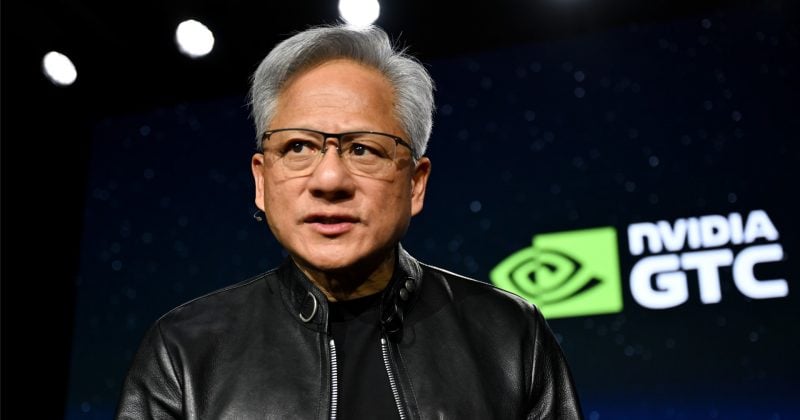
Nvidia's Bold Forecast: A $20 Trillion Market Cap by 2030
In a striking assertion that has captured the attention of investors and analysts alike, Nvidia CEO Jensen Huang has suggested that the company’s market capitalization could soar to $20 trillion by the year 2030. This ambitious projection aligns with the ongoing advancements in artificial intelligence (AI) and the burgeoning intersection of AI with cryptocurrency, a sector that has begun to rally in response to Huang's vision. As Nvidia continues to solidify its position as a leader in AI hardware and software, the implications of this forecast extend far beyond the company itself, potentially reshaping the technology landscape.
The Current Landscape of Nvidia and AI
Nvidia has long been recognized for its pioneering work in graphics processing units (GPUs), but the company's strategic pivot towards AI has significantly broadened its market potential. With the increasing reliance on AI across various industries, from healthcare to finance, Nvidia's products have become essential for companies looking to harness the power of machine learning and data analytics. The company’s GPUs are not only pivotal in training AI models but are also integral to the deployment of AI applications, creating a robust demand for its technology.
Market Reactions to Huang’s Vision
Following Huang's comments, market analysts have begun to reassess Nvidia’s growth trajectory. Beth Kindig, a prominent analyst, suggests that the company's market cap could indeed reach the staggering $20 trillion mark within the next seven years. This projection is underpinned by several factors, including the rapid adoption of AI technologies, the expansion of data centers, and the increasing integration of AI into everyday consumer products. As investors digest these insights, Nvidia's stock has seen a notable uptick, reflecting renewed optimism about the company's future.
The Role of AI Crypto Tokens
Another element contributing to the bullish sentiment surrounding Nvidia is the emergence of AI-centric cryptocurrency tokens. These digital assets, designed to leverage AI capabilities, have begun to gain traction in the market. The infrastructure developed by Nvidia plays a critical role in this ecosystem, providing the computational power necessary for the development and operation of these tokens. As AI and blockchain technologies converge, Nvidia stands to benefit from both sectors, potentially driving its market cap higher.
Challenges Ahead: Competition and Regulation
Despite the promising outlook, Nvidia faces significant challenges that could impact its journey toward a $20 trillion market cap. The technology sector is highly competitive, with numerous companies vying for dominance in AI and related fields. Major players like AMD and Intel are investing heavily in AI technologies, which could pose a threat to Nvidia's market share. Additionally, regulatory scrutiny surrounding AI and cryptocurrency could introduce hurdles that might impede growth, particularly as governments around the world grapple with the implications of these rapidly evolving technologies.
The Global AI Market: A Catalyst for Growth
The global AI market is projected to grow exponentially in the coming years, with estimates suggesting it could reach $190 billion by 2025. This growth presents a significant opportunity for Nvidia, as the company is well-positioned to capitalize on the increasing demand for AI solutions. As industries continue to adopt AI to enhance efficiency and drive innovation, Nvidia's role as a key supplier of the necessary hardware and software will likely become even more critical.
Investor Sentiment and Institutional Interest
Investor sentiment towards Nvidia has been increasingly positive, fueled by institutional interest in AI technologies. Large investment firms are recognizing the potential of AI to transform industries and are allocating capital to companies like Nvidia that are at the forefront of this transformation. This influx of investment can provide Nvidia with the resources needed to continue innovating and expanding its product offerings, further solidifying its market position.
Technological Advancements: The Path to $20 Trillion
For Nvidia to achieve a $20 trillion market cap, it will need to continue pushing the envelope in technological advancements. Innovations in GPU architecture, AI algorithms, and data processing capabilities will be essential. The company’s commitment to research and development has historically set it apart from competitors, and maintaining this focus will be crucial as it navigates the challenges and opportunities of the next decade.
The Impact of AI on Various Industries
The implications of Nvidia’s growth extend beyond the company itself, impacting a wide array of industries. From healthcare, where AI is revolutionizing diagnostics and treatment plans, to finance, where machine learning is enhancing risk assessment and trading strategies, the ripple effects of Nvidia's advancements in AI will be felt across the economy. This broad applicability of AI technologies suggests that Nvidia’s growth could be supported by a diverse range of revenue streams, further bolstering its market cap potential.
Conclusion: A Visionary Path Forward
Jensen Huang’s projection of a $20 trillion market cap for Nvidia by 2030 is undoubtedly ambitious, but it is also grounded in the reality of the rapidly evolving technology landscape. As AI continues to permeate various sectors and the intersection with cryptocurrency gains momentum, Nvidia's strategic positioning places it in a unique position to capitalize on these trends. While challenges remain, the potential for growth is vast. For investors and market observers, Nvidia’s journey toward this audacious goal will be one to watch closely in the coming years.